diseonfire:

indiaincredible:

Step-wells in India by Victoria Lautman

So I clicked through and had a read of the story. It’s worth doing.

Step-wells were used as a way to access water, which could fluctuate wildly between almost nothing in the dry season, to overflowing right to the top of the stairwells even, during the monsoon season.

Constant pumping however, has dropped the water table, so most of these structures are no longer in use and are being used as rubbish dumps or just left to decay. Victoria Lautman (in 2015 at the time the article was written) has been going around India trying to photograph all of these structures before they disappear.

Historically Authentic Sexism in Fantasy. Let’s Unpack That.

celynbrum:

gwydionmisha:

writeroost:

gwydionmisha:

As someone who originally trained as a social historian of the Medieval Period, I have some things to add in support of the main point.  Most people dramatically underestimate the economic importance of Medieval women and their level of agency.  Part of the problem here is when modern people think of medieval people they are imagining the upper end of the nobility and not the rest of society. 

Your average low end farming family could not survive without women’s labour.  Yes, there was gender separation of labour.  Yes, the men did the bulk of the grain farming, outside of peak times like planting and harvest, but unless you were very well off, you generally didn’t live on that.  The women had primary responsibility for the chickens, ducks, or geese the family owned, and thus the eggs, feathers, and meat.  (Egg money is nothing to sneeze at and was often the main source of protein unless you were very well off).  They grew vegetables, and if she was lucky she might sell the excess.  Her hands were always busy, and not just with the tasks you expect like cooking, mending, child care, etc.. As she walked, as she rested, as she went about her day, if her hands would have otherwise been free, she was spinning thread with a hand distaff.  (You can see them tucked in the belts of peasant women in art of the era).  Unless her husband was a weaver, most of that thread was for sale to the folks making clothe as men didn’t spin.  Depending where she lived and the ages of her children, she might have primary responsibility for the families sheep and thus takes part in sheering and carding.  (Sheep were important and there are plenty of court cases of women stealing loose wool or even shearing other people’s sheep.)  She might gather firewood, nuts, fruit, or rushes, again depending on geography.  She might own and harvest fruit trees and thus make things out of that fruit.   She might keep bees and sell honey.  She might make and sell cheese if they had cows, sheep, or goats.  Just as her husband might have part time work as a carpenter or other skilled craft when the fields didn’t need him, she might do piece work for a craftsman or be a brewer of ale, cider, or perry (depending on geography).  Ale doesn’t keep so women in a village took it in turn to brew batches, the water not being potable on it’s own, so everyone needed some form of alcohol they could water down to drink.  The women’s labour and the money she bought in kept the family alive between the pay outs for the men as well as being utterly essential on a day to day survival level.

Something similar goes on in towns and cities.  The husband might be a craftsman or merchant, but trust me, so is his wife and she has the right to carry on the trade after his death.

Also, unless there was a lot of money, goods, lands, and/or titles involved, people generally got a say in who they married.  No really.  Keep in mind that the average age of first marriage for a yeoman was late teens or early twenties (depending when and where), but the average age of first marriage for the working poor was more like 27-29.  The average age of death for men in both those categories was 35.  with women, if you survived your first few child births you might live to see grandchildren.

Do the math there.  Odds are if your father was a small farmer, he’s been dead for some time before you gather enough goods to be marrying a man.  For sure your mother (and grandmother and/or step father if you have them) likely has opinions, but you can have a valid marriage by having sex after saying yes to a proposal or exchanging vows in the present (I thee wed), unless you live in Italy, where you likely need a notary.  You do not need clergy as church weddings don’t exist until the Reformation.  For sure, it’s better if you publish banns three Sundays running in case someone remembers you are too closely related, but it’s not a legal requirement.  Who exactly can stop you if you are both determined?

So the less money, goods, lands, and power your family has, the more likely you are to be choosing your partner.  There is an exception in that unfree folk can be required to remarry, but they are give time and plenty of warning before a partner would be picked for them.  It happened a lot less than you’d think.  If you were born free and had enough money to hire help as needed whether for farm or shop or other business, there was no requirement of remarriage at all.  You could pick a partner or choose to stay single.  Do the math again on death rates.  It’s pretty common to marry more than once.  Maybe the first wife died in childbirth.  The widower needs the work and income a wife brings in and that’s double if the baby survives.  Maybe the second wife has wide hips, but he dies from a work related injury when she’s still young.  She could sure use a man’s labour around the farm or shop.  Let’s say he dies in a fight or drowns in a ditch.  She’s been doing well.  Her children are old enough to help with the farm or shop, she picks a pretty youth for his looks instead of his economic value.  You get marriages for love and lust as well as economics just like you get now and May/December cuts both ways.

A lot of our ideas about how people lived in the past tends to get viewed through a Victorian or early Hollywood lens, but that tends to be particularly extreme as far was writing out women’s agency and contribution as well as white washing populations in our histories, films, and therefore our minds eyes.

Real life is more complicated than that.

BTW, there are plenty of women at the top end of the scale who showed plenty of agency and who wielded political and economic power.  I’ve seen people argue that the were exceptions, but I think they were part of a whole society that had a tradition of strong women living on just as they always had sermons and homilies admonishing them to be otherwise to the contrary.  There’s also a whole other thing going on with the Pope trying to centralized power from the thirteenth century on being vigorously resisted by powerful abbesses and other holy women.  Yes, they eventually mostly lost, but it took so many centuries because there were such strong traditions of those women having political power.

Boss post! To add to that, many historians have theorised that modern gender roles evolved alongside industrialisation, when there was suddenly a conceptual division between work/public spaces, and home/private spaces. The factory became the place of work, where previously work happened at home. Gender became entangled in this division, with women becoming associated with the home, and men with public spaces. It might be assumable, therefore, that women had (have?) greater freedoms in agrarian societies; or, at least, had (have?) different demands placed on them with regard to their gender.

(Please note that the above historical reading is profoundly Eurocentric, and not universally applicable. At the same time, when I say that the factory became the place of work, I mean it in conceptual sense, not a literal sense. Not everyone worked in the factory, but there is a lot of literature about how the institution of the factory, as a symbol of industrialisation, reshaped the way people thought about labour.)

I am broadly of that opinion.  You can see upper class women being encouraged to be less useful as the piecework system grows and spreads.  You can see that spread to the middle class around when the early factory system gears up.  By mid-19th century that domestic sphere vs, public sphere is full swing for everyone who can afford it and those who can’t are explicitly looked down on and treated as lesser.  You can see the class system slowly calcify from the 17th century on.

Grain of salt that I get less accurate between 1605-French Revolution or thereabouts.  I’ve periodically studied early modern stuff, but it’s more piecemeal.

I too was confining my remarks to Medieval Europe because 1. That was my specialty.  2. A lot of English language fantasy literature is based on Medieval Europe, often badly and more based on misapprehension than what real lives were like.

I am very grateful that progress is occurring and more traditions are influencing people’s writing.  I hate that so much of the fantasy writing of my childhood was so narrow.

Wanna reblog this because for a long time I’ve had this vague knowledge in my head that society in the past wasn’t how people are always assuming it was (SERIOUSLY VICTORIANS, THANKS FOR DICKING WITH HOW WE VIEW EVERYTHING HISTORICAL). I get fed up with people who complain about fantasy stuff, claiming “historical accuracy” to whine about ethnic diversity and gender equality and other cool stuff that lets everyone join in the fun, and then I get sad because the first defence is always “it’s fantasy, so that doesn’t matter.”

I mean, that’s a good and valid defence, but here you have it; proof fucking positive that historical accuracy shows that equality and diversity are not new ideas and if anything BELONG in historical fiction. As far as I can tell, most people in the past were too bloody busy to get all ruffled up about that stuff; they had prejudices, but from what little I know the lines historically drawn in the sand were in slightly different places and for different reasons. (You can’t trust them furrigners. It’s all pixies and devil-worship over there).

So next time someone tells you that something isn’t “historically accurate” because it’s not racist/sexist/any other form of bigotry for that matter-ist enough for their liking, tell them to shut the hell up because they clearly know far less about history than they do about being an asshole.

Historically Authentic Sexism in Fantasy. Let’s Unpack That.

thegreenwolf:

jenniferrpovey:

doctornanitesreblogs:

cacklebarnacle:

jumpingjacktrash:

themiscyra1983:

one-for-all-plus-ultra:

xekstrin:

icedsilver:

tilthat:

TIL plants make caffeine to defend themselves against pests. Caffeine is toxic to birds, dogs, cats, and it has a pronounced adverse effect on mollusks, various insects, and spiders.

via reddit.com

Coffee plant: *evolves caffeine* Safe at last

Humans: ( ͡° ͜ʖ ͡°)

Why are we like this….

the fact that we can’t drink sea water even tho its the most common type of water just bc its 3% salt yet we can safely consume multiple forms of literal poison and even benefit from doing so just blows my fucking mind

Peppers: Now that I have capsaicin, no mammal will eat me! ONLY BIRDS. THE BIRDS WILL SPREAD MY SEEDS.

Humans: oh my god this burns so good

Peppers: wut

poppies: at last, i have evolved my sap to the point where anything that eats me will sleep… FOREVER

humans who are about to invent painkillers: hey guess what

tobacco: finally i can grow in peace, no more insects munching on my leaves.

humans holding matches: my, my, what do we have here?

Mint: Stay off me bugs or I’ll poison you!

Humans: Yeah I’m gonna need to put this poison in my dessert and mix it with chocolate. 

That said, look how many pepper plants, tobacco plants, mint plants, coffee plants, etc, there are.

Being liked by humans is actually a dang good survival strategy for a plant species.

You basically just summed up Michael Pollan’s “The Botany of Desire” in a few sentences.

useless ancient roman law facts

dragon-in-a-fez:

thoodleoo:

  • if you call someone to witness and they refused to show up, you are legally entitled to stand outside their house and scream, but only every third day
  • you can sell your son into slavery once or twice, but after the third time he doesn’t have to put up with that shit anymore
  • no wailing allowed at funerals
  • also you can only have ONE funeral per person, don’t get greedy
  • if your neighbor’s tree has a branch hanging into your yard, you can legally cut down the entire fucking tree
  • however, if some of your neighbor’s fruit from his dumb tree falls into your yard, he can legally come into your yard to snoop around get it
  • if you call someone to witness and they’re too sick or old to get to court themselves, you have to provide a cart for them to come in, but it doesn’t have to be, like, a nice cart if you don’t want it to

the best thing about this is that each of these things must have happened at least once

ray-winters-sings:

child-of-crows:

queer-trans-amazon:

awed-frog:

rhymeswspinach:

just-shower-thoughts:

Maybe medieval people happened upon a T-Rex fossil and came to a relatively logical conclusion that dragons existed.

I’ve read a couple books on this actually, thats exactly what happened. Also cyclops are from looking at bones from a certain type of baby elephant. The giant note hole and tiny eyes made it look like a single eye.

Yep, can confirm! And what’s even funnier to me is that back in the dark ages, Greek people used to find a lot of prehistoric bear skeletons – and those look exactly like human skeletons, except they’re like eight feet tall or something – so they naturally assumed those were the heroes of legend, and made armour and clothes for them and reburied them with the most splendid and sacred religious ceremonies they could think of? Fast forward five centuries, Athens’ all modern and rational, philosophers and scientists aren’t taking any shit from anyone – but the problem is, people will randomly find graves containing giant-ass warriors, so that’s something that can’t be explained away and yeah, demigods were a thing and yeah, they used to be eight feet tall and sorry I don’t make the rules.

Some scientists suspect that the origin of the cyclops myths came about because of elephant skulls, which are vaguely human in shape but with a honking big hole in the middle for the trunk but easily mistakable for an eye socket without any flesh

this is the first time i’ve ever seen an elephant skull outside an elephant and i don’t like it much

….outside…the elephant???

anarchomoop:

gunsandfireandshit:

Even funnier thing to imagine: resurrecting Diogenes too and telling him that “Platonic” relationships means not fucking, he’d probably laugh himself back to death.

So I actually know the origin of this term because it came up when I studied Plato in my classes.  Basically, in ancient Greece it was a super common practice for teachers to fuck their students.  Like all the time.  It was considered a way for the student to “pay” the teacher.  Plato thought this was bullshit.  He felt that a student could not properly learn from someone who was truly only interested in having sex with them.  He didn’t fuck his students and derided those who did.  Other teachers who refused to fuck their students were said to have “platonic” teaching relationships with them – so named because they were following Plato’s example.  So the reason it’s called a Platonic relationship is because Plato was heavily anti-teachers-fucking-their-students and it’s one of the few things he was ever even remotely correct about.

groovyseb:

thicc-vanexel:

The Mayans had mastered water pressure and had fountains and toilets as early as 750 AD.
Aztecs had running water and sewage.

The Victorians In the mid-1800s were dying of cholera because they just dumped their raw shit in the river Thames. They wouldn’t shower for months at a time because they were afraid of the polluted water.

Incans had created aquaducts in the slopes of the vast Andes mountains to reach the emperor, cities and farmers who used agricultural terraces.

Mayans, Aztecs, and Incans were far more advanced than the savage Europeans.

allthecanadianpolitics:

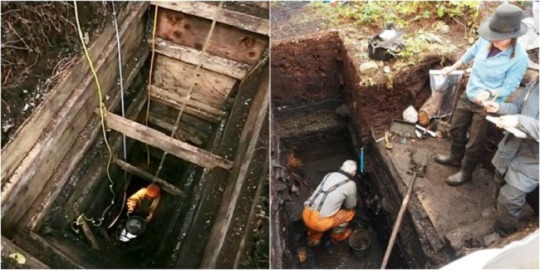
Ancient village discovered in Canada is 10,000 years older than the pyramids.

The discovery of a 14,000-year-old ancient village in Canada could forever alter our understanding of early civilization in North America. Researchers estimate the settlement is way older than the Giza pyramids, and have found artifacts dating all the way back to the Ice Age. The village is one of the oldest human settlements we’ve ever uncovered in North America – and lines up with the oral history of the Heiltsuk Nation.

Researchers from the Hakai Institute and University of Victoria, with local First Nations members, unearthed revealing artifacts on Triquet Island, around 310 miles northwest of Victoria, Canada. They’ve found fish hooks, spears, and tools to ignite fires. Thanks to the discovery of the ancient village last year, researchers now think a massive human migration may have happened along British Columbia’s coastline.

https://unitedhumanists.com/2018/10/06/ancient-village-discovered-in-canada-is-10000-years-older-than-the-pyramids/

Submitted by nathanialroyale.